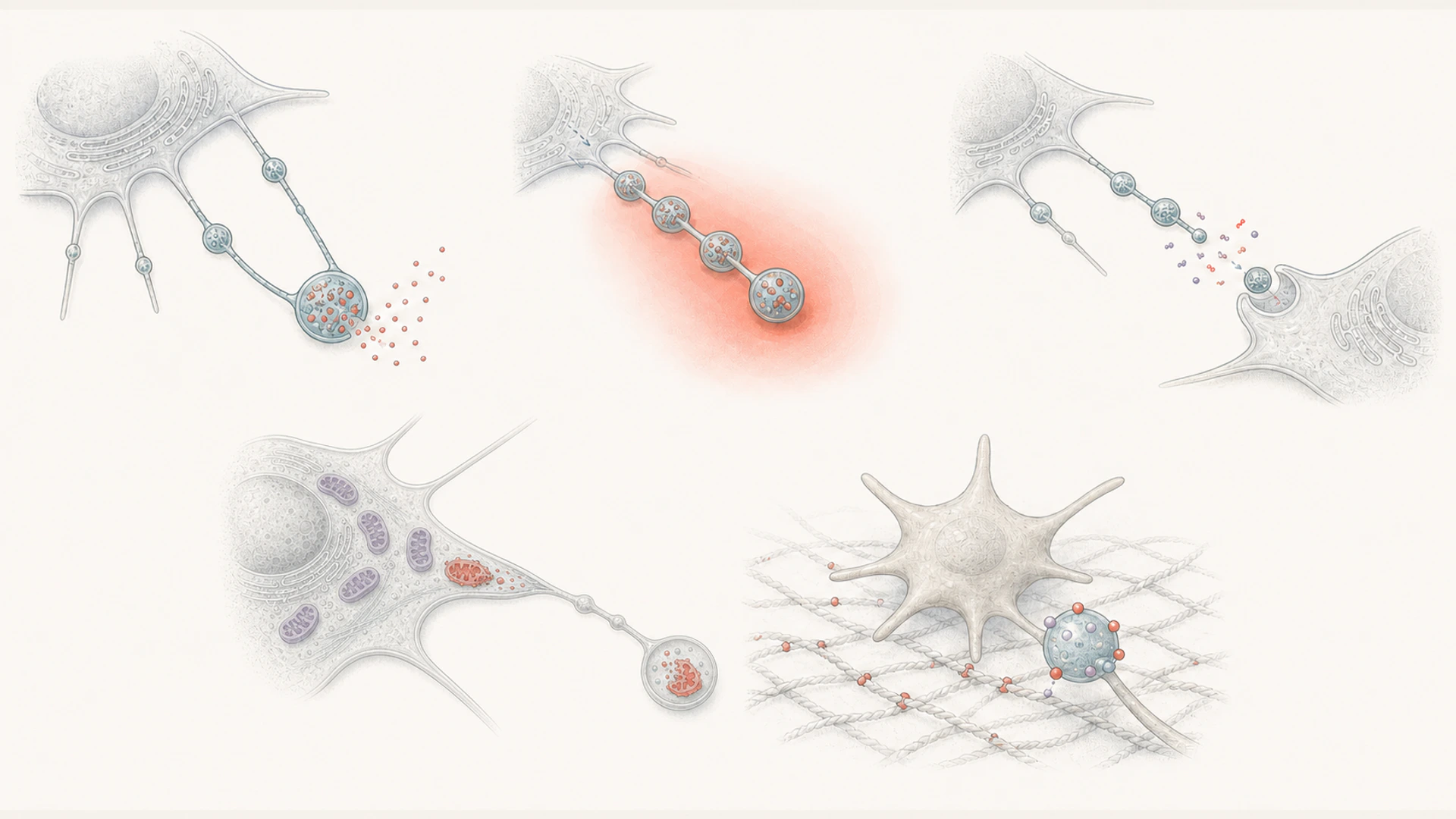
Local signal secretion
Migrasomes can concentrate and locally release signaling molecules such as cytokines, temporarily separating the release site from the migrating cell that produced them.
Migrasome release adds a spatial dimension to signaling and provides a tool for complex biological functions such as development.
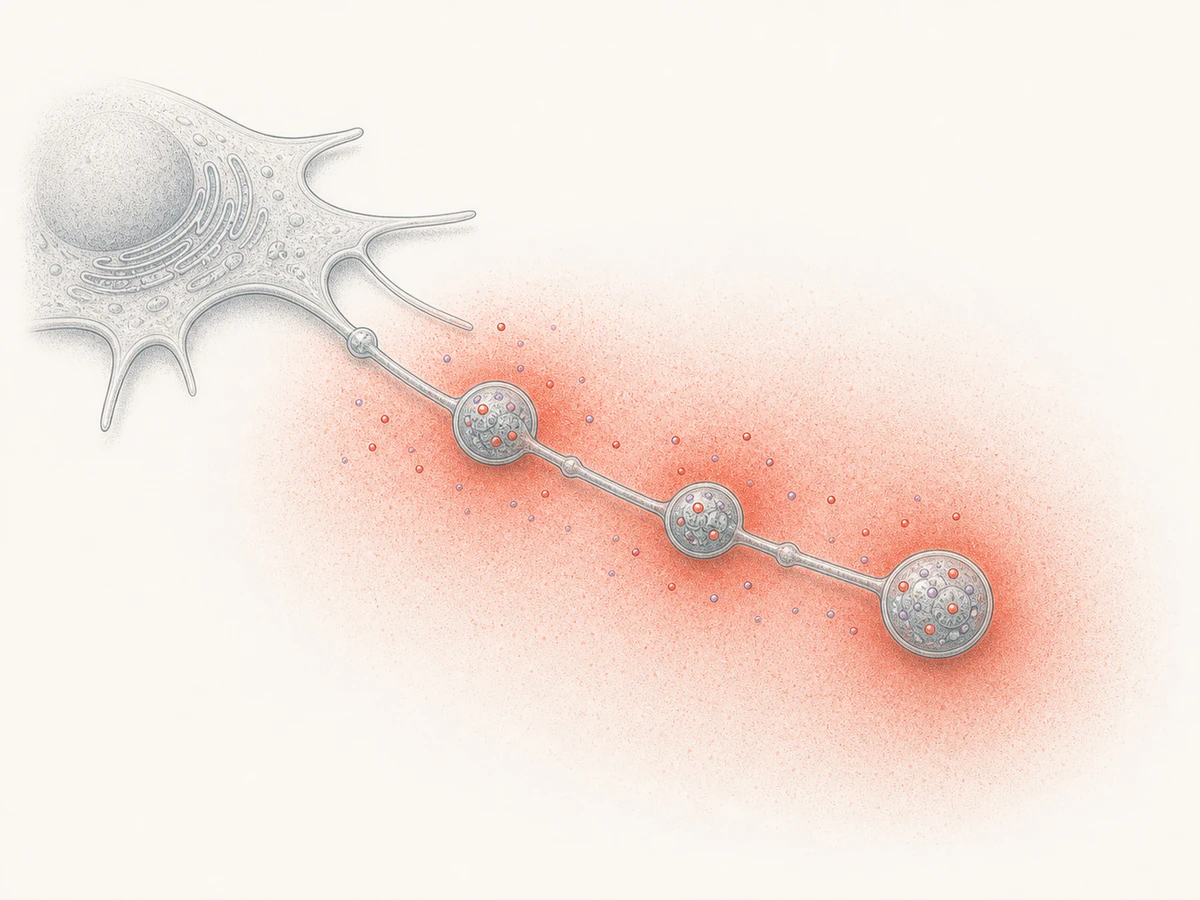
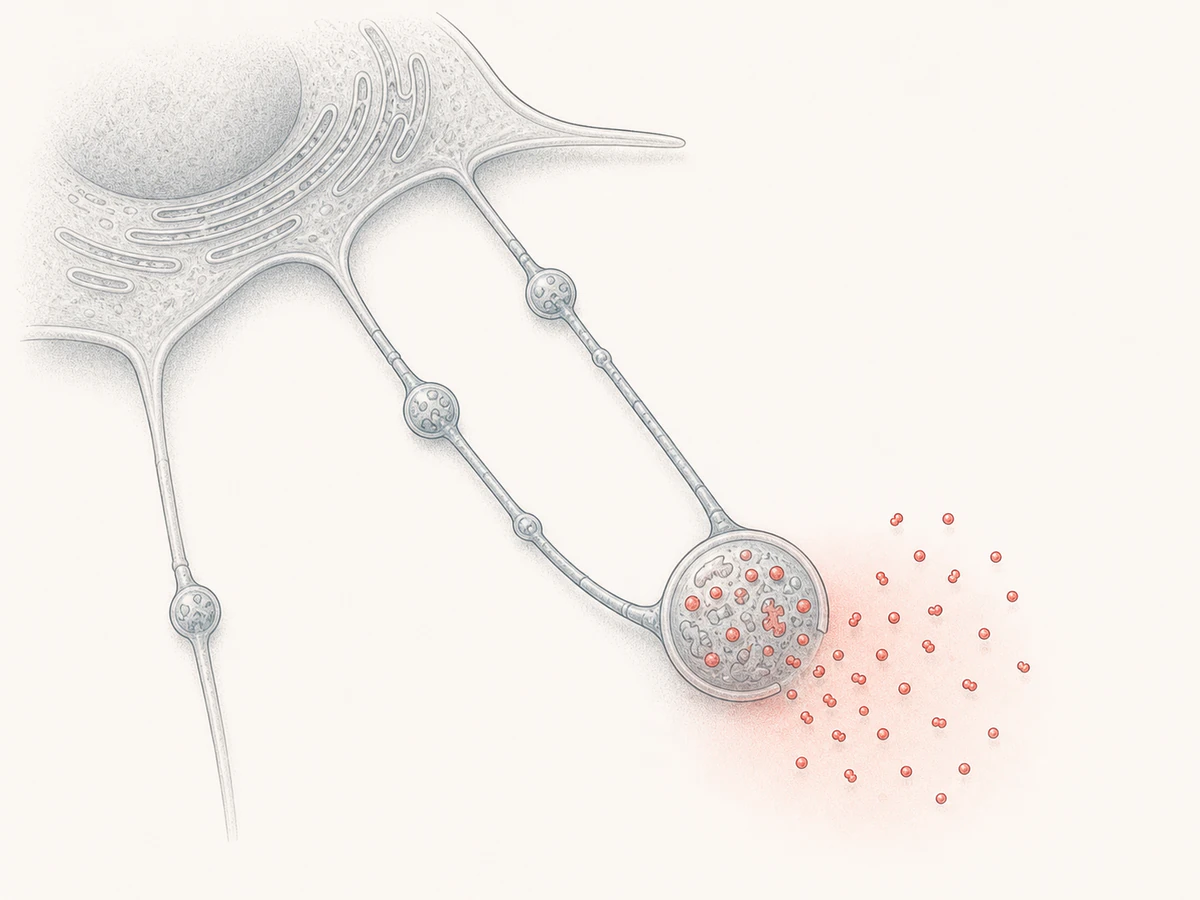
Spatial signaling centers and gradients
Create local signaling centers that neighboring cells can read within tissues.
When migrasomes are deposited along migration tracks, multiple release sites can shape spatial signal distributions and influence organ morphogenesis or vascular responses.
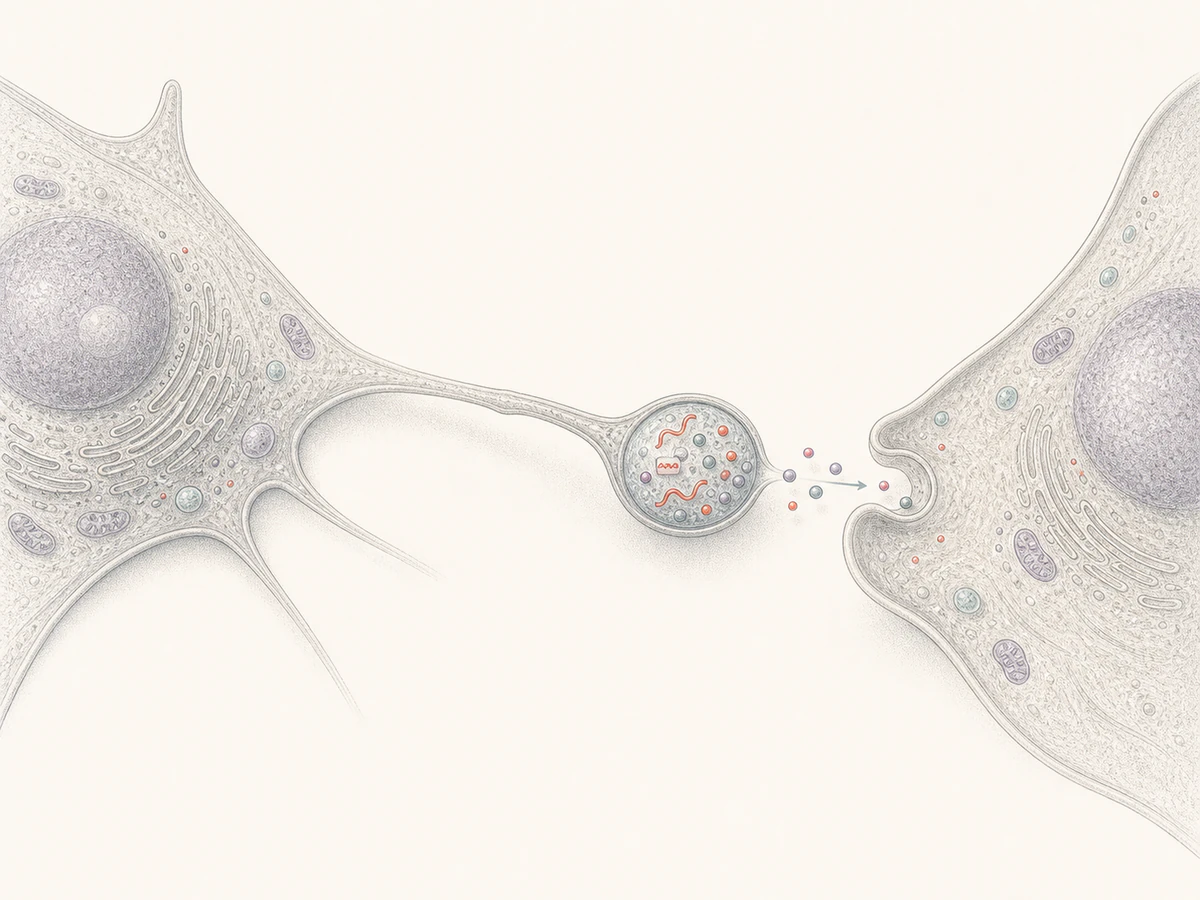
Intercellular material transfer
Pass proteins, RNA, or organelle-associated material to recipient cells.
Migrasomes can be taken up by recipient cells and transfer cargos such as proteins and RNA in experimental models.
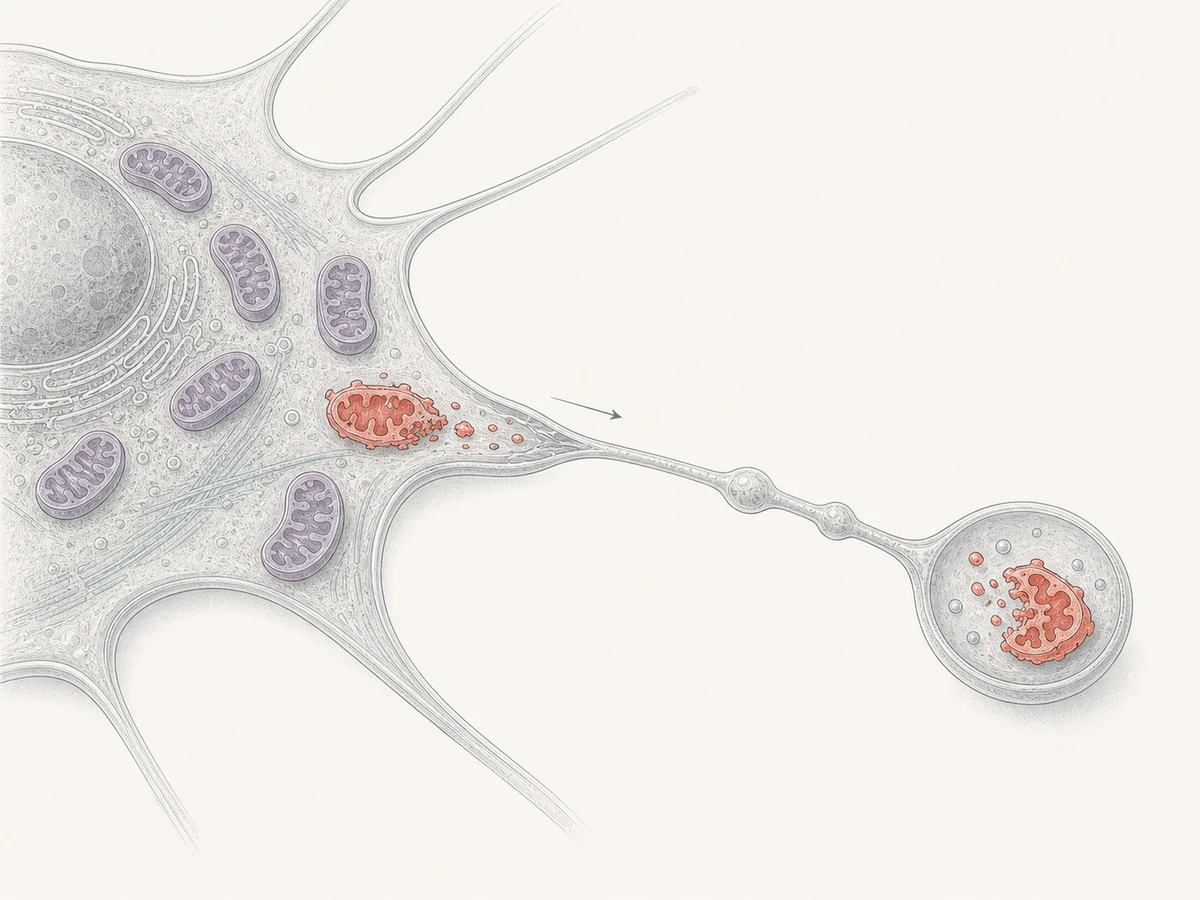
Cellular homeostasis and mitocytosis
Help migrating cells remove damaged mitochondrial material and maintain quality control.
In mitocytosis models, damaged mitochondria-associated material can enter migrasomes and be removed from the cell with them. Damaged mitochondria are recognized by Kif5b and transported along microtubules into migrasomes through the Myo19 protein.
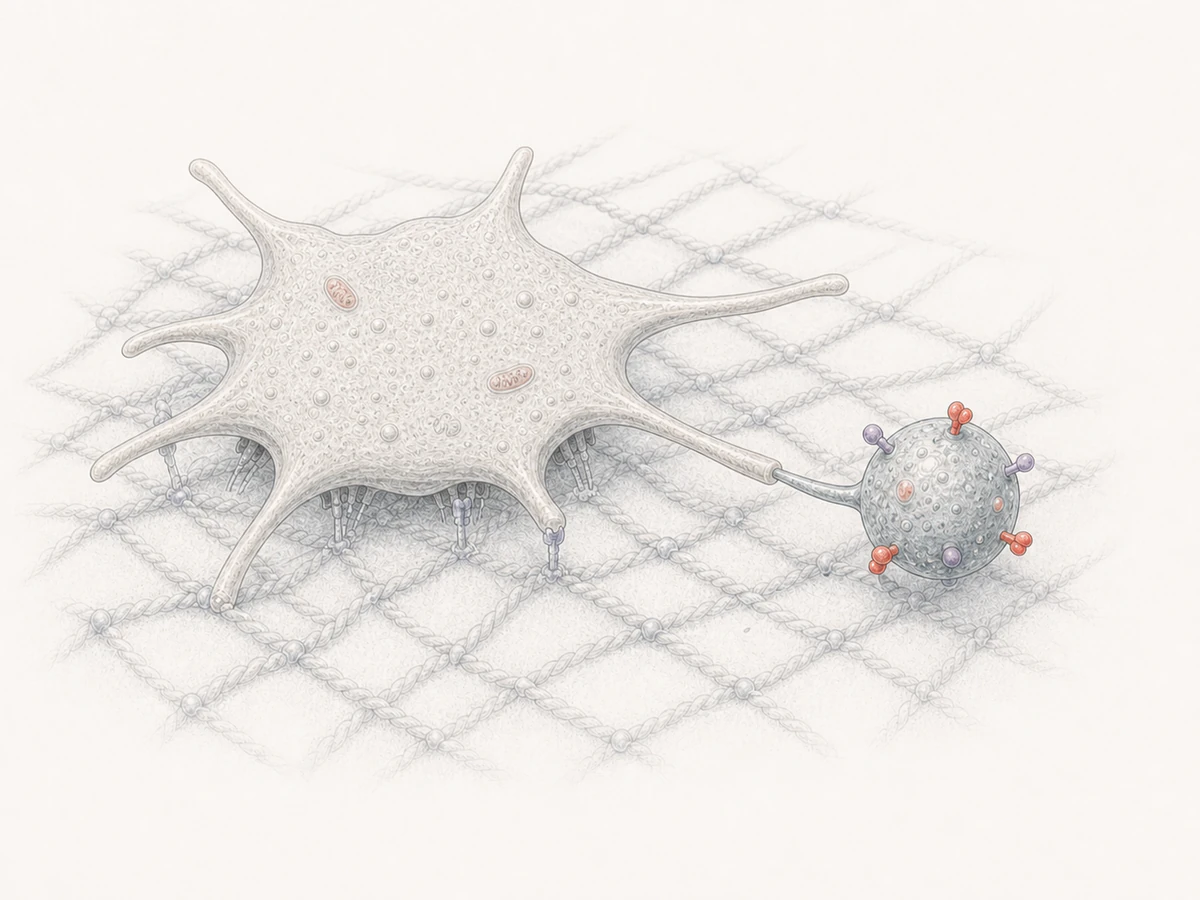
Coagulation-factor adsorption and delivery
Adsorb coagulation-related proteins and participate in local coagulation responses at injury sites.
During inflammation and infection, neutrophil-derived migrasomes increase markedly in mice and humans. They can adsorb coagulation-related proteins on their surface, localize to collagen exposed at wounds, and further recruit and activate platelets to form thrombi.
Migrasome Functions
What do migrasomes do?
Current research connects migrasomes to five testable functions: local release, spatial signaling, intercellular material transfer, cellular homeostasis, and coagulation-factor delivery.